
Wine storage · 6 min read
Keeping wine right: what a Sub-Zero wine unit owes a Napa cellar
In wine country a drifting wine column isn't an inconvenience — it's a risk to the collection. The temperature and humidity faults we see most in Napa.
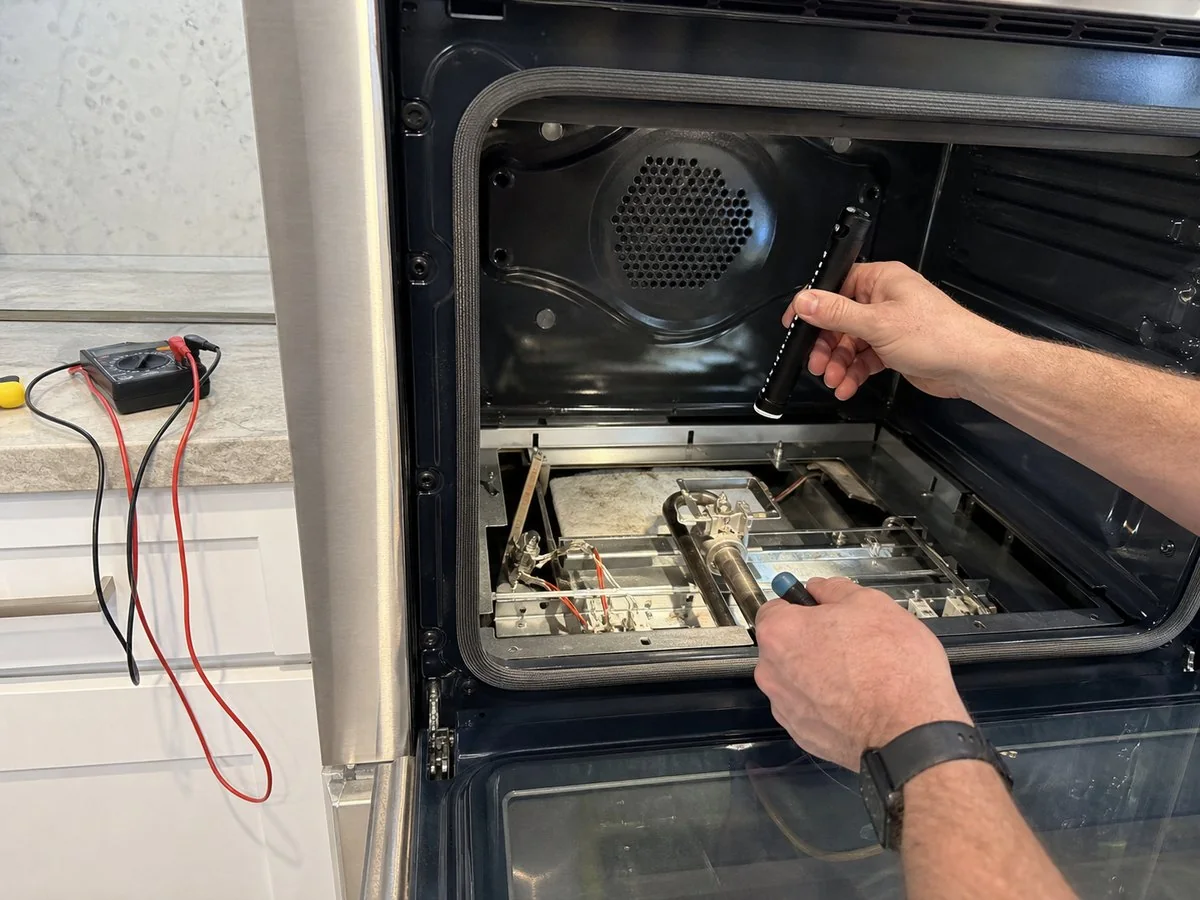
Almost every serious Napa kitchen we visit has a dedicated Sub-Zero wine unit, and for good reason — when you live where the wine is made, you tend to keep some of it. That also means a wine column here isn't holding a few bottles of weeknight red. It's protecting a collection, and a unit that drifts two or three degrees over a warm valley summer can quietly cost far more than the repair.
Here is what actually goes wrong with these units in Napa, and how to read the early signs before the wine pays for it.
Temperature drift is the warning, not the failure
A wine unit is built to hold a tight band, and the first sign of trouble is rarely a dramatic shutdown — it's slow drift. The set point reads 55 but the bottles feel warmer; one zone of a dual-zone column won't separate from the other. On the valley floor, where summer afternoons are genuinely hot, a unit with a loaded condenser or a tired door seal loses the fight gradually, holding fine in spring and slipping by August. If you only check the collection seasonally, you can miss months of drift. A simple bottle thermometer left on a shelf is the cheapest early-warning system there is.
When the cause is a clogged condenser or a worn gasket, it's a clean, bounded repair. When a zone won't hold or the display reads an error, it's usually a thermistor, a damper, or the control — all serviceable with genuine OEM parts.
Humidity and vibration matter here too
Napa's cooler, fog-heavy mornings mean indoor humidity swings more than people expect, and a wine unit that can't manage its own internal humidity will dry corks over time. If you're seeing seepage or shrinking corks, the unit's seal or humidity control deserves a look. Vibration is the other quiet enemy — a wine column with a failing fan bearing or an out-of-balance compressor transmits a low hum into the bottles it's meant to keep still, and that's worth chasing down before it becomes a sealed-system call.
FAQ
Questions & answers
How tight should my wine unit hold temperature?
A healthy Sub-Zero wine column holds its set point within a couple of degrees. If you're seeing a steady drift of three or more, or one zone won't separate from the other, have it checked before the warm season makes it worse.
Is a drifting wine unit usually an expensive repair?
Often not. The common Napa causes — a loaded condenser, a worn door gasket, a failed thermistor or damper — are bounded repairs with stocked parts. We diagnose first and show you the readings before recommending anything.
Go deeper
More Napa guides
Reading the CLEAN CONDENSER Light on a Napa Sub-Zero
Sub-Zero's CLEAN CONDENSER light in Napa: how vineyard dust clogs the coil, the 6-to-12-month cleaning interval, and when warm-drift is a sealed-system fault.
Read the guide → Door Left Open Recovery · 4 minSub-Zero Door Left Open Overnight in Napa: What Happens and How It Recovers
Left your Sub-Zero door open overnight in Napa? Most units recover in 4-12 hours. What to check first, frost warnings, and when the sealed system needs help.
Read the guide → Repair guide · 6 minSub-Zero Wine Cooler Repair in Napa: how the dual-zone column actually fails
A field guide to the parts that break inside a Sub-Zero wine cooler — dual-zone sensors, the sealed system, fans, gaskets and UV glass — and when a Napa column is worth repairing.
Read the guide →Rather leave it to a specialist?
Have the failing compartment and model number ready, and you will get a real first opinion — not a sales pitch.