
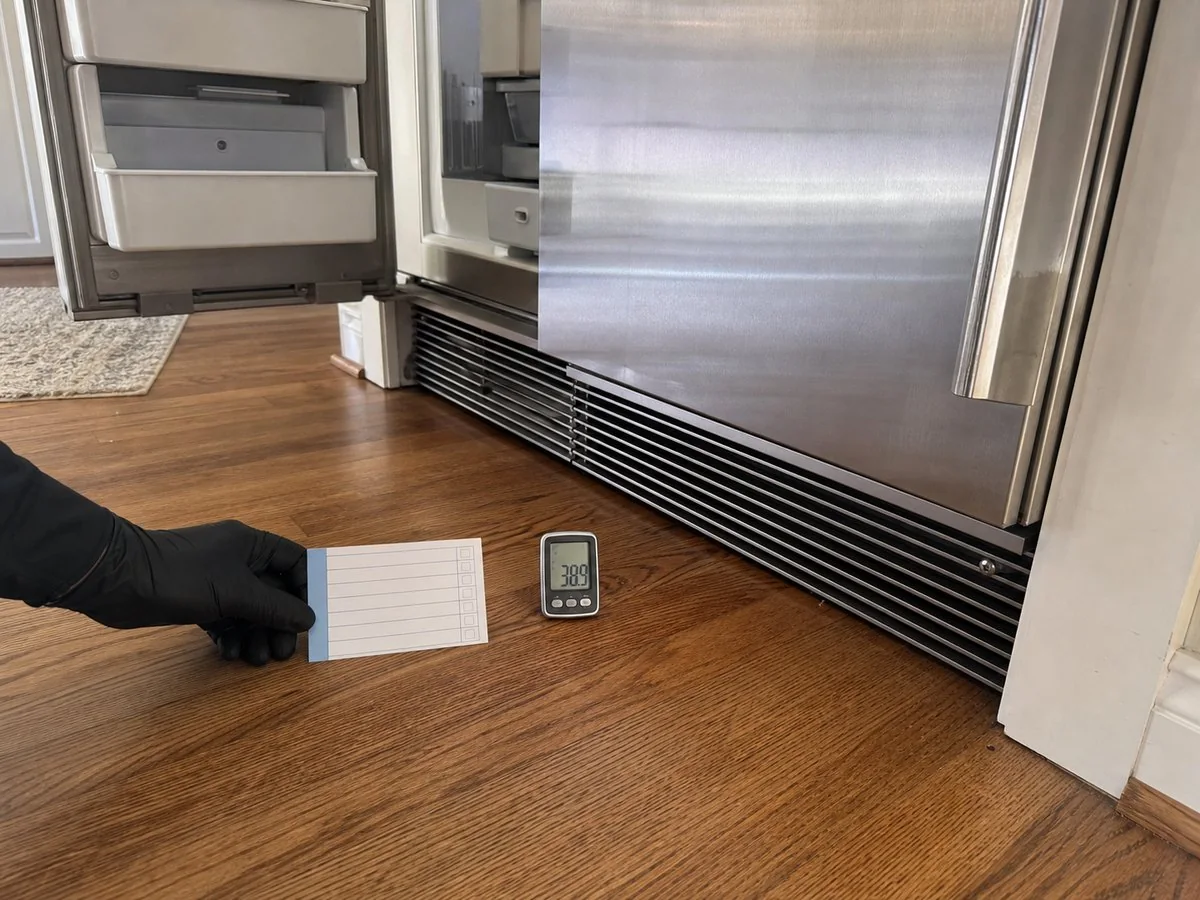
“We arrived after 10 days away to a 48°F refrigerator and soft freezer. The caretaker handled access while the technician sent model-tag, temperature and condenser photos before quoting. The $680 defrost-branch repair was approved remotely and verified with timestamped 37°F and 0°F readings.”
4.9/5 network rating372 verified repairs
Second homes
Second-home Sub-Zero service protocol for Napa
A second-home Sub-Zero visit in Napa should be planned around access instructions, current temperatures, food or wine urgency and whether the unit has been off-cycle between visits. A property manager can often coordinate access and basic symptom details to plan the visit before the owner is in town.
Second-Home Protocol
Remote intake before dispatch
Second homes create a different service problem from occupied kitchens. The owner may not know when the appliance first drifted warm, a property manager may have limited time on site, and the cabinet may protect wine or food that has already been exposed for an unknown period. The service desk therefore needs evidence that can be collected remotely: model tag, serial number, display photo, current temperatures, access instructions and the urgency level.
The goal is not to diagnose the whole appliance remotely. The goal is to set the right route, part expectation and service window. If the evidence points to a common branch, a same-visit repair may be realistic. If it points to sealed-system suspicion or a serial-dependent legacy part, the owner should know that a quote or second visit may be required.
This table separates remote evidence from dispatch decisions.
| Remote situation | Evidence needed | Dispatch decision |
|---|---|---|
| Owner is out of town, manager has access | Model tag, serial, temperatures, display photo, cabinet photos | Plan standard diagnostic window and part check |
| Wine column warm before event | Probe readings by zone, bottle risk, event date | Prioritize triage and possible stabilization |
| Fresh-food warm, freezer cold | Both compartment temperatures and noise/fan notes | Likely airflow or sensor branch, bring common parts if serial matches |
| Both sides warm after long absence | When last known cold, food risk, condenser access | Urgent diagnostic; sealed-system branch cannot be confirmed remotely |
| Door sweat or frost line | Door photos, paper-slip note, hinge/panel photos | Gasket or alignment branch; serial match required |
| Access through gate or estate staff | Gate code process, parking, contact authority | Confirm adult approval path before dispatch |
Remote evidence shortens the visit because it lets the desk route the call correctly without pretending the repair is already known.
Second-Home Protocol
Property-manager prep checklist
A property manager does not need refrigeration tools to make the visit more useful. The most valuable steps are safe: photograph the tag, read the display, place a thermometer or probe if available, clear access to the grille, note whether food or wine is at risk and confirm who can approve the written quote. The manager should not reset the unit repeatedly, open refrigerant access or move a built-in appliance.
Cabinet access matters in Napa estate kitchens. A panel-ready unit may need floor protection, water shutoff access and enough room for a controlled pull. If the manager sends photos of the lower grille, toe-kick, surrounding panels and floor material, the technician can prepare cabinet-safe protection instead of discovering the constraints on arrival.
Use this checklist when the owner is not physically present.
| Manager action | Why it matters | Do not do |
|---|---|---|
| Photograph model and serial tag | Confirms serial-matched parts | Do not guess from an old invoice alone |
| Record fresh-food/freezer/wine temperatures | Creates a baseline before dispatch | Do not keep opening doors to recheck |
| Photograph display or alarm | Preserves code before it clears | Do not reset until code is captured |
| Clear grille and front access | Lets condenser and airflow checks start quickly | Do not remove panels if unsure |
| Coordinate cabinet and floor access | Helps plan floor/millwork protection | Do not pull the built-in unit |
| Confirm approval authority | Written quote needs an adult approval path | Do not authorize work without owner policy |
The manager's job is evidence and access. Technician-only diagnosis still happens on site.
Second-Home Protocol
What can be told before the visit
Before the visit, the desk can often tell which diagnostic branch is most likely, whether a serial-matched part check is needed and whether the schedule should be urgent. The desk cannot honestly confirm a failed compressor, board or refrigerant leak without readings from the unit. This boundary is important because second-home owners often face travel decisions and want certainty before anyone opens the door.
The best pre-visit answer is conditional: if the fresh-food side is warm but freezer holds, expect airflow, fan, damper, thermistor or defrost checks first. If both sides are warm, expect condenser and sealed-system triage. If a wine column is drifting, expect probe verification before board replacement. Those branches are useful enough for planning, though the exact part is confirmed on-site.
This table distinguishes remote planning from on-site proof.
| Question | Can answer remotely? | Requires on-site diagnosis |
|---|---|---|
| Which part fits? | Often, if model/serial photo is clear | Confirmation before installation |
| Is this urgent? | Often, based on temperatures and risk | Actual cabinet recovery rate |
| Is the compressor bad? | No, only a suspicion branch | Pressure, amperage and temperature evidence |
| Can bottles wait? | Sometimes, based on probe readings | Whether drift is accelerating |
| Is a gasket leaking? | Sometimes, from photos and paper-slip note | Door alignment and hinge condition |
| Will it need a second visit? | Sometimes, if part is ordered | Final part and scope after inspection |
The protocol gives remote owners a practical decision path without inventing certainty.
FAQ
Questions this page answers
Should a second-home owner wait until they are in town?
Not always. A property manager can coordinate access details, temperatures and access notes before dispatch so the visit can be planned.
Can a property manager approve the repair?
Only if the owner has authorized that process. The written quote needs a clear adult approval path before work begins.
What helps before booking?
Current temperatures, symptom timeline, access notes and any food or wine risk help set the right service window. The technician verifies the model tag on-site.
Can the diagnosis be completed remotely?
No. Remote evidence helps plan the visit, but failed parts and sealed-system issues require on-site readings.
What should the manager avoid?
Avoid repeated resets, refrigerant access, electrical disassembly and pulling a built-in unit from cabinetry.
How does parts lead time affect a second home?
If the correct OEM part must be ordered, the visit may become diagnostic plus return repair, so serial matching before dispatch matters.
What if food or wine has been warm for days?
Document the temperatures and timeline. The repair visit can address the appliance, but food and wine safety decisions should be conservative.
Which related pages help?
Use the cost hub, model-number guide, wine proof page and call and booking page to prepare the intake.
Local reviews
Second-home protocol reviews with remote access and documented proof
4.9/5 network rating372 verified repairs
“The owner was traveling when a wine column hit 60°F. I met the technician, who logged probe readings, checked airflow and confirmed a weak thermistor before calling the owner. The $510 repair was completed same day, and the written record made remote approval straightforward.”
“We had only a 2-day visit window, so the protocol helped us send serial photos and symptom notes early. The technician arrived with the correct gasket, completed the $475 repair in under 2 hours, and left final temperature readings for our property file.”
Service desk: 1300 First Street, Suite 368, Napa, CA 94559. Visits are scheduled by appointment; call before stopping by.