
Repair guide · 6 min read
Sub-Zero Wine Cooler Repair in Napa: how the dual-zone column actually fails
A field guide to the parts that break inside a Sub-Zero wine cooler — dual-zone sensors, the sealed system, fans, gaskets and UV glass — and when a Napa column is worth repairing.
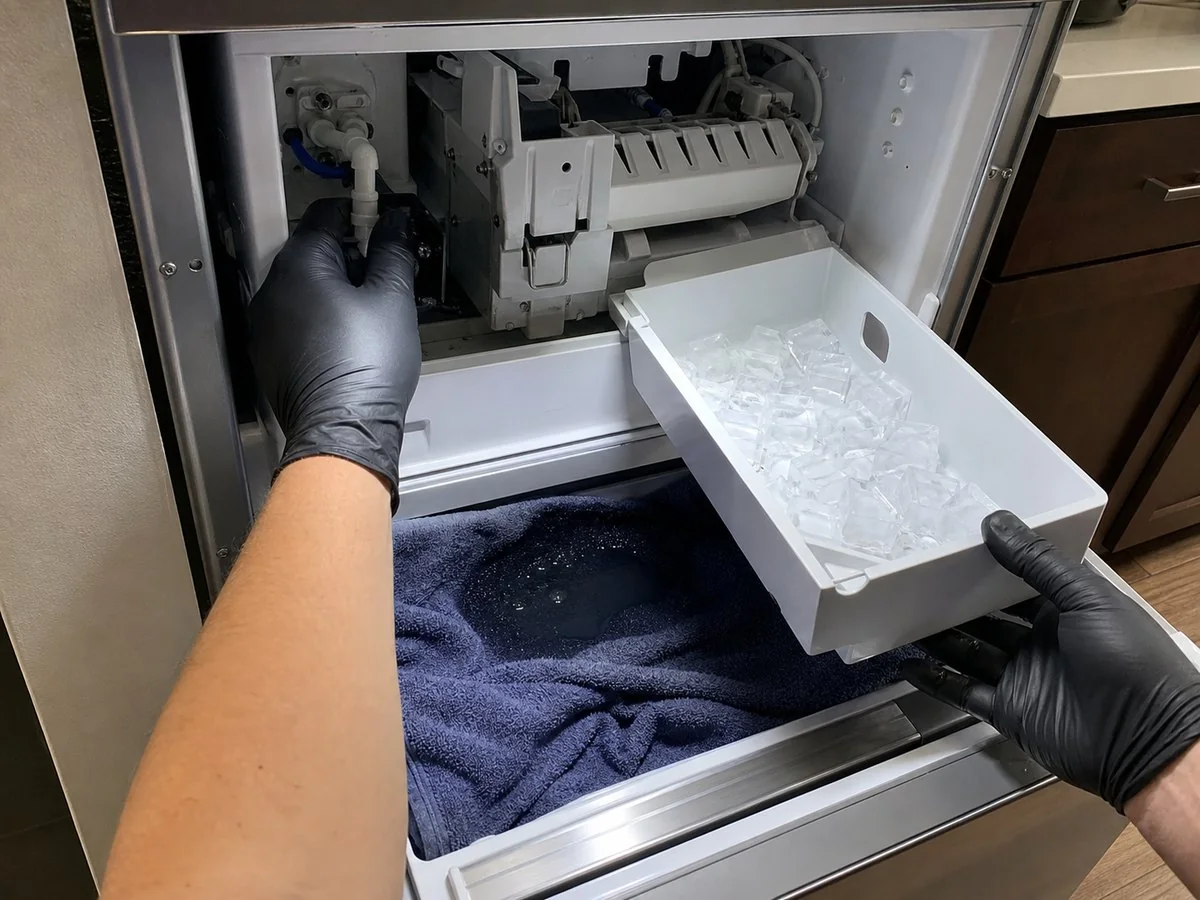
Ask any Napa household with a built-in Sub-Zero wine cooler what they want from it and the answer is the same: hold the number, stay quiet, and never gamble with the bottles. So when one of these columns starts misbehaving, the useful question isn't "is it broken" — it's which specific part is drifting, because a wine cooler is really four small systems stacked in one cabinet, and each one fails in its own recognizable way.
This is a parts-level walk through the Sub-Zero wine column — what each component does, how you can tell which one is acting up, and where the line between a sensible repair and a replacement actually sits here in the valley.
The dual-zone brain: sensors, dampers, and the control
A dual-zone Sub-Zero cooler runs one refrigeration system but splits the cabinet into two independently set bays — a cooler reds-and-whites top, a slightly warmer serving bay, whatever the owner dials in. It pulls that off with a thermistor in each zone, a motorized damper that meters cold air between them, and a control board reading both. When a thermistor starts reading high, the board over-cools or under-cools that bay and the two zones stop separating the way they should — both shelves end up at roughly the same temperature even though the display still shows two set points. A sticking damper does something similar from the mechanical side. The good news for a Napa owner: thermistors, dampers, and the control are discrete, stocked, OEM-replaceable parts, so this class of fault is almost always a clean repair rather than a write-off — the trick is measuring which of the three is lying before anything is swapped.
The sealed system and the airflow around it
Underneath the electronics is the part that does the actual cooling: a small sealed system — compressor, condenser, evaporator, refrigerant — moving heat out of the cabinet. In a wine cooler this system is sized tight, with very little spare capacity, which is exactly why airflow problems show up here before they would on a big refrigerator. The condenser behind the grille collects the fine dust that drifts through valley-floor kitchens all summer, and a loaded condenser forces a marginal compressor to run nearly nonstop on a hot Napa afternoon — the classic slow warm-drift that creeps in by August and eases off when the weather cools. A failing evaporator or condenser fan produces the same warm drift with a tell-tale change in sound. Real sealed-system trouble — a weak compressor or a refrigerant leak — is rarer and is the one genuinely expensive repair on the list, so a wine cooler that's warm deserves a condenser-and-fan check first, before anyone reaches for the sealed system.
The cabinet's quiet defenses: gasket, UV glass, and vibration
The last system is the one that protects the wine from the room. The door gasket seals warm air out; on a cooler near Napa's fog-cooled riverfront it's also the part that frosts or sweats first when it hardens, and on a sun-exposed valley-floor wall a tired seal just runs the compressor ragged. The UV-tinted glass door blocks light that fades and cooks a collection over time — a delaminating or cracked seal on that glass is worth taking seriously in a region where the bottles are often the most valuable thing in the kitchen. And then there's vibration, the subtle one: a wine cooler is supposed to be still so sediment settles, and a failing fan bearing or an unbalanced compressor sends a low hum into the bottles it's meant to keep quiet. Catch that hum early and it's a fan or a mount; ignore it and it migrates toward the sealed system.
Repair or replace, in plain terms
For a built-in Sub-Zero wine column the math usually favors repair, because the parts owners actually need — thermistors, dampers, fans, gaskets, the control board — are bounded, stocked items on a cabinet that's bolted into the millwork and expensive to swap out. The one honest exception is a failed compressor or a refrigerant leak on an older unit, where the sealed-system cost climbs toward replacement territory and it's worth a frank conversation. Our approach in Napa is to diagnose first and show you the temperature readings and the suspect part before recommending anything, so the decision is yours and it's based on numbers rather than a guess.
FAQ
Questions & answers
My Sub-Zero wine cooler's two zones are reading the same temperature — what's wrong?
When dual zones stop separating, the usual cause is a drifting thermistor or a sticking damper feeding the control bad information, not a failed cooler. All three are stocked OEM parts, so it's typically a straightforward repair once we measure which one is off.
Is a Sub-Zero wine cooler usually worth repairing in Napa?
Almost always. The common faults — sensors, dampers, fans, gaskets, control board — are bounded repairs on a built-in cabinet that's costly to replace. The only time replacement enters the picture is a failed compressor or refrigerant leak on an older unit, and we'll show you the readings before you decide.
Go deeper
More Napa guides
Reading the CLEAN CONDENSER Light on a Napa Sub-Zero
Sub-Zero's CLEAN CONDENSER light in Napa: how vineyard dust clogs the coil, the 6-to-12-month cleaning interval, and when warm-drift is a sealed-system fault.
Read the guide → Door Left Open Recovery · 4 minSub-Zero Door Left Open Overnight in Napa: What Happens and How It Recovers
Left your Sub-Zero door open overnight in Napa? Most units recover in 4-12 hours. What to check first, frost warnings, and when the sealed system needs help.
Read the guide → Seasonal guide · 5 minGet your Sub-Zero ready before Napa's harvest crush
Late summer in the valley is the worst time for a built-in to quit. A Napa owner's pre-crush checklist for the Sub-Zero that's about to work overtime.
Read the guide →Rather leave it to a specialist?
Have the failing compartment and model number ready, and you will get a real first opinion — not a sales pitch.